


Behind the Scenes: How We Manufacture Bespoke Display Plinths
Behind the Scenes: How We Manufacture Bespoke Display Plinths
A finished display plinth might look simple, but there's quite a bit of work that goes into getting it just right.
From choosing the right materials to achieving a flawless finish, every stage plays a part in creating a display that looks good and does its job properly.
At Plinths and Pedestals, we've been making display plinths for over 25 years. Our Sussex workshop is where ideas take shape, whether we're producing a single bespoke plinth or a collection of displays for a major retail launch.
So, what actually happens behind the scenes?
It All Starts With an Idea
Not every project arrives with a detailed drawing or a complete set of measurements. Sometimes a customer knows exactly what they want. Other times, they have a rough sketch, a photograph or simply an idea they'd like to explore.
That's where our team comes in.
We look at what the plinth needs to display, where it will be used and any practical requirements. Size, shape, weight, materials and finishes all come into the conversation.
A plinth for a busy exhibition might need hidden storage, while a gallery display may call for a particular height or finish. Getting these details right from the beginning makes all the difference.

From Design to the Workshop
Once the design is agreed, it's time to turn the idea into something real.
Our team works with a variety of materials, including high-grade MDF, timber and specialist finishes, depending on the project.
Each component needs to be carefully measured, cut and assembled. Clean edges, accurate joins and a durable construction are particularly important when creating bespoke display plinths.
It's hands-on work, and experience counts. Even the smallest details can affect how a finished plinth looks, especially when it has a smooth, uninterrupted surface.
Getting the Finish Just Right
This is where a display plinth really starts to come together.
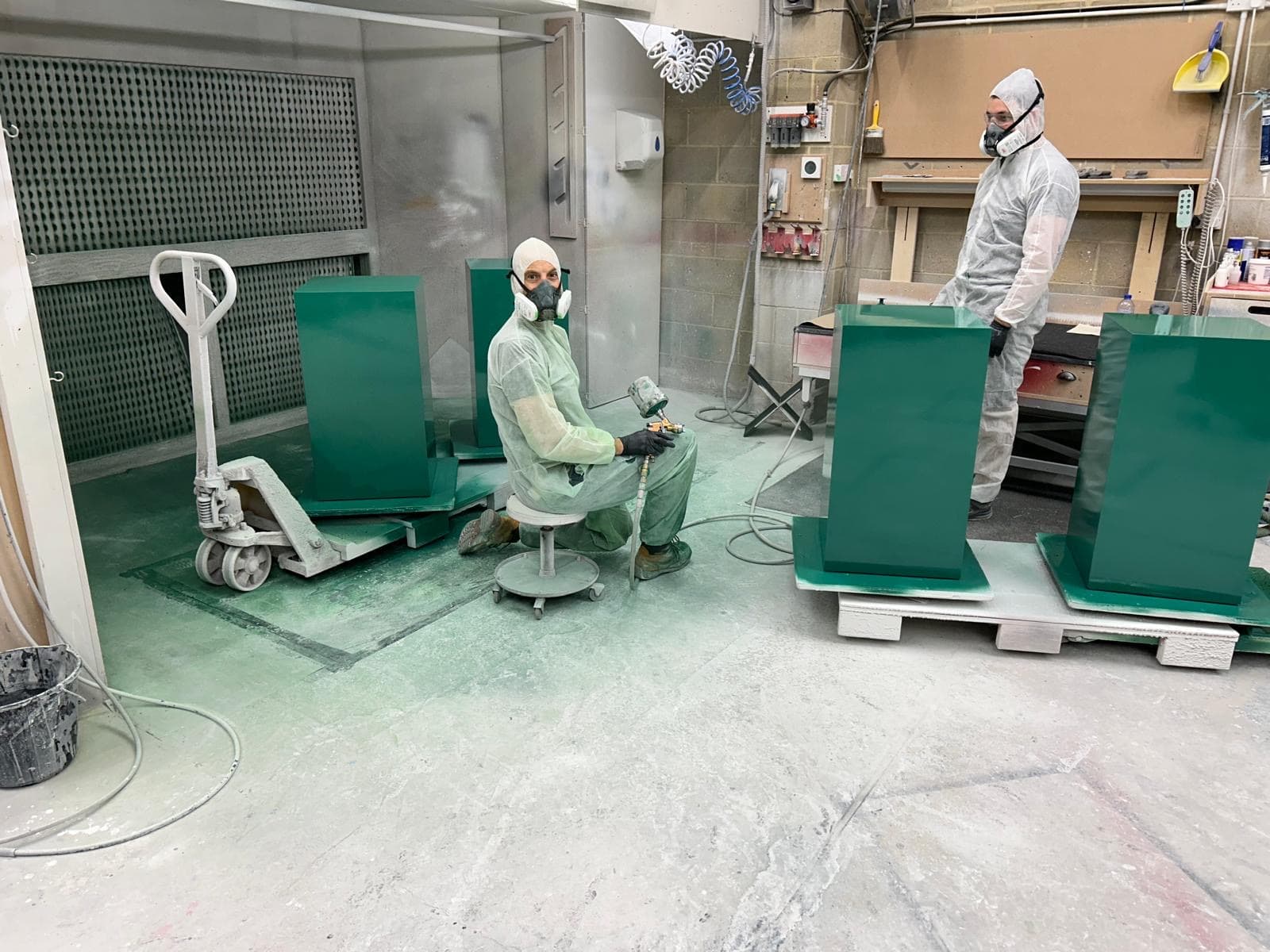
Our in-house spray finishing team works with a wide range of colours and finishes, from classic matt white to high gloss, wood veneers and more unusual effects.
For customers looking for something different, we can also create liquid metal and concrete effects, including aged finishes and patina.
Of course, a great finish isn't simply about appearance. It also needs to suit the environment where the plinth will be used.
A retail display, exhibition feature or permanent installation may each have different requirements, so we help customers choose the most suitable option.
Adding the Finishing Touches
Sometimes a standard plinth is all that's needed. Other projects call for a few extras.
Depending on the design, we can incorporate LED lighting, lockable storage, vinyl branding or display cases to create something more functional.
These features can make a big difference, particularly at exhibitions and events where presentation and practicality need to work together.
It's all about making sure the finished display does what the customer needs it to do.
Quality Checks Before Delivery
Before a bespoke plinth leaves our workshop, it goes through quality checks to make sure everything meets our standards.
From the construction to the final finish, we want every piece to arrive looking its best.
Our team also helps coordinate delivery, particularly for exhibitions and events where timings are important. After all, even the most impressive display isn't much use if it doesn't arrive when it's needed!
More Than Just a Display Plinth
One of the things we enjoy most about bespoke manufacturing is that no two projects are quite the same.
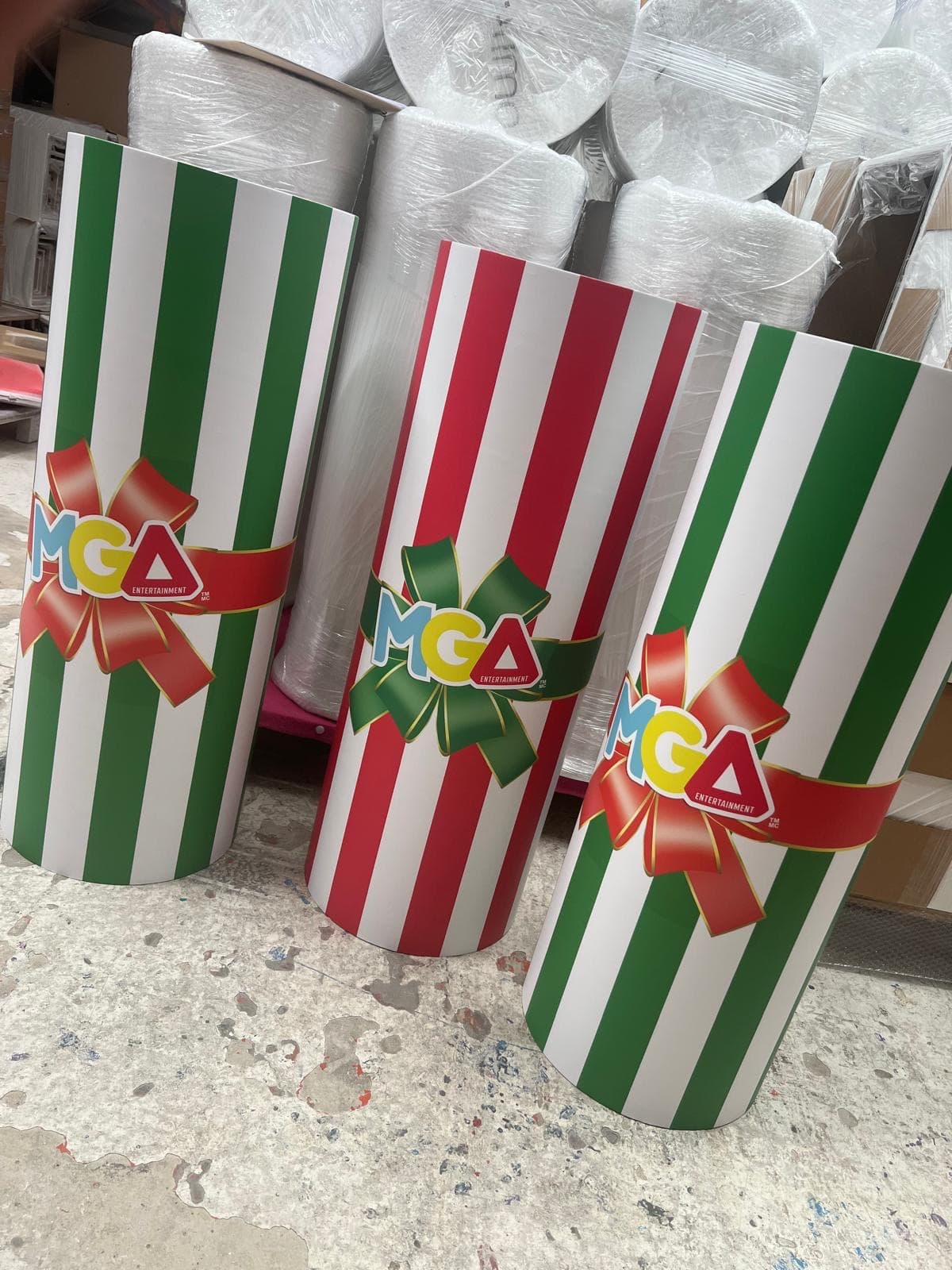
We've worked on everything from straightforward product displays to unusual retail installations that started with little more than a collection of reference images.
Our Farm Rio coconut cart project is a great example. Working from photographs of an existing cart, our team recreated the design for retail installations at Liberty London and in Ibiza. It wasn't a traditional display plinth, but it shows the same creativity, problem-solving and hands-on skills that go into our bespoke work.
Have Something in Mind? Let's Make It Happen
Whether you're planning an exhibition, creating a retail display or looking for something completely different, our team can help bring your ideas to life.
Explore our custom plinths, browse our case studies or get in touch to discuss your project.
You don't need to have everything worked out before contacting us. Sometimes the best projects start with a simple idea.


For further information about our products please contact us at our workshop Office hours 8 am to 4 pm (Mon - Fri) 0800 975 4601. Email: info@pshopuk.com
Free delivery on stocked purchases mainland UK only - Free hire delivery London & South East minimum hire order value £749 +vat surcharge may apply please contact us for a quote - **A Surcharge will apply for deliveries on Saturday, Sunday, Bank Holidays and or outside the hours of 09:00am to 05:00pm please contact us for a quote.*
Additional waiting charge applied to London Excel hire delivery & collection - see Terms & Conditions or contact us for more details.
Certified fire rated products are available on request, please contact us for help and a detailed quote.
Acrylic Products - Please Call or Email to Confirm Delivery Lead Times

